Open Source Workshop Automation

This post presents Marmot Chirp, an Intelligent Workshop Assistant (IWA) to be used at the Unit One workshop. It is an implementation of Home Assistant that could find its physical expression on a Raspberry Pi. However, there may be issues that require other hardware to be used. Thus, a more likely alternative would be a Gigabyte Brix EKi3A IoT unit with:

  • Intel 7th Generation Core i3-7100U Processor
  • Fanless 0.76 liter volume design: 180(W) x 117(D) x 36(H) mm, Weight 978g
  • 1 x COM port (RS232)*
  • 2 x USB 3.1 (1 x USB Type-C™), 2 x USB 3.0
  • HDMI 2.0 plus Mini DisplayPort 1.2 Outputs (Supports dual displays)
  • 2 x SO-DIMM DDR4 Slots 2133 MHz, Max 32GB
  • 1 x M.2 SSD (2280) slot
  • IEEE 802.11ac, Dual Band 1×1 Wi-Fi & Bluetooth 4.2 NGFF M.2 card
  • Gigabit LAN
  • Headphone/Microphone Jack
  • VESA mounting bracket (75 x 75mm + 100 x 100mm)
GB-EKi3A Brix iot
Gigabyte Brix IoT platform

Regardless of the computer used, it will have to be fitted with additional equipment: speaker, microphone and light. The light will be off (indicating system is not functioning), steady on (system is in use), pulsing on (system in standby mode).

Why Chirp?

An intelligent personal assistant needs a name, so it knows when it is being activated. Female names are often used, eg Alexa and Siri. I pity the poor girls with those names, or anyone living in proximity to them, with such assistants. Similarly, an IWA has to be addressed, so it knows when users want something done. One of the most important characteristics in naming an intelligent assistant, is that the name is unique, and not used in normal conversation. In a workshop, calling the IWA Plywood or Lathe is just asking for trouble. Here, the name used is Chirp.

bty
The Unit One Workshop, at Vangshylla, Inderøy, Norway

Dialogue

There are a lot of different situations in a workshop where a user would want to interact with a IWA, and other situations where the workshop owner, through the IWA wants information from a user.

Much of the terminology used would be based on voice procedure used in other situations.

1. Visitor arrival

The IWA has proximity and other sensors to detect the presence of a visitor.

A. Known user.

IWA: Welcome to Unit One. I’m Chirp, an intelligent workshop assistant. Who are you?

Brock: Chirp, I am Brock

IWA: Welcome Brock. Your personal safety equipment is in box <A/ B/ C/ C/>.You are logged in at <time> on <date>.

B. Unknown user.

IWA: Welcome to Unit One. I’m Chirp, an intelligent workshop assistant. Who are you?

Cynthia: Chirp, I am Cynthia

IWA: I don’t recognize you, Cynthia. Please use the computer to log in or register yourself.

…

IWA: Thank you for registering, Cynthia. You are inside the Unit One workshop, where people use technology to make the world a better place. In front of you is box <A/ B/ C/ D> containing your personal safety equipment, including safety glasses, hearing protection, gloves, and respirator. Please use the equipment you need. Please note that there is a first aid kit and a fire extinguisher near the entrance, and a second fire extinguisher at the end of the workshop, near the Annex. These are to be used when needed. If you need help, just call me by my name, Chirp. You are logged in at <time> on <date>. Please remember to log out when you leave.

I have heard some interesting titles used by an IPA to address one or more users. The one in particular that I would want to avoid is, “Yes, Master.”

2. Other Events

A. Audio (video?) contact with house, referred to as Fjellheim, meaning mountain home, in Norwegian:

User: Chirp

IWA: Yes?

User: Chirp, Patch me through to Fjellheim.

Event: Telephone rings Brock or Trish, depending on who is home.

(Postive response) IWA: Contacted Fjellheim

(Negative response) IWA: No one is at home at Fjellheim.

With a positive response, a dialog would then follow. The IWA would be listening to the entire conversation waiting for its name and new instructions. The conversation would end with:

User: Chirp, terminate.

IWA: Conversation terminated.

B. Audio contact with emergency services:

User: Chirp

IWA: Yes?

User: Patch me through to <emergency services/ambulance/ fire department/ police>.

Event: IP telephone contacts appropriate service

(Positive response) IWA: Contacted <service>

(Negative response) IWA: Unable to contact <service>

C. Turn on electrical circuit for a particular machine (but not the machine itself, except dust control and air).

User: Chirp

IWA: Yes?

User: Enable <dust/ air/ drill/ band saw/ mitre saw/ table saw/ planer/ router/ sander>

Event: Circuit turned on for <dust/ air/ drill/ band saw/ mitre saw/ table saw/ planer/ router/ sander>

Positive IWA: <dust/ air/ drill/ band saw/ mitre saw/ table saw/ planer/ router/ sander> enabled.

Negative IWA: Unable to enable <dust/ air/ drill/ band saw/ mitre saw/ table saw/ planer/ router/ sander>

D. Turn off electrical circuit for a particular machine (turn off the machine itself for dust control and air).

User: Chirp

IWA: Yes?

User: Disable <dust/ air/ drill/ band saw/ mitre saw/ table saw/ planer/ router/ sander>

Event: Circuit turned off for <dust/ air/ drill/ band saw/ mitre saw/ table saw/ planer/ router/ sander>

Positive IWA: <dust/ air/ drill/ band saw/ mitre saw/ table saw/ planer/ router/ sander> disabled.

Negative IWA: Unable to disable <dust/ air/ drill/ band saw/ mitre saw/ table saw/ planer/ router/ sander>

3. Visitor Departure

Person: Chirp

IWA: Yes?

Person: <name of person> is leaving.

IWA: Goodbye <name of person> Please put your personal safety equipment in box <A/ B/ C/ C/>.You are logged out at <time> on <date>.

What other events need to be controlled? What other comments do you have about an intelligent workshop assistant?

Update: 2021-12-20 at about 21:00.

This weblog post was originally published 2017/10/29 at 05:49, which is four years and fifty-two days ago. This is a trial to see if eliminating Needs the title, has any consequences. That is because, at the time of publication, this post formed part of a Needs, Seeds and Weeds website that belonged to my daughter, Shelagh. In addition, other things are also out of date, or my opinions have changed. Apart from the title, the text above remains as it was, content changes are found below.

Internet connectivity. The workshop is in theory connected to the server (Mothership) with a fiber optical cable. Theoretically, inside the workshop the cable terminates at a switch. In practice none of these installations have taken place, yet. The cable has been purchased, tubing has been laid between the workshop and the house, but work is needed to get the cable from the outside of the house to the server.

Inside the workshop the switch could be something as simple as a Unifi Flex Mini, with five Gb Ethernet PoE connections, one in, and four out. For about ten times the price, 10Gb Ethernet PoE connections can be supplied using a Unifi Flex XG unit. Wifi should not be a problem if a Unifi 6 Lite access point is connected to one of the ports.

As discussed in a recent post about Forth, the machine controller would be programmed in Forth. This could be a single unit attached with an Ethernet cable to the switch. At the present time, this unit could be a Raspberry Pi 4B.

For design, engineering, administrative and other purposes a relatively high powered workstation computer should be available. An Asus Zen AiO machine was purchased used to be a kitchen controller. This machine was rejected, and could be taken into use in the workshop. It comes with a touch-screen.

With an access point, machine controller and workstation in use in the workshop, three of the four output ports of the switch are in use.

Every Soul …

Every soul needs a fortress to protect it against the onslaught of the modern world. Life isn’t for weaklings. Living demands effort. Surprisingly, the Baha’i Faith does not promote work, or even careers, as this fortress. Rather it comes from marriage. A true marriage is not just confined to this world, but lasts almost perpetually.

“The true marriage of Bahá’ís is this, that husband and wife should be united both physically and spiritually, that they may ever improve the spiritual life of each other, and may enjoy everlasting unity throughout all the worlds of God.”

Bahá’u’lláh described marriage as a “fortress for well-being.”

I don’t think Bahá’u’lláh was just talking about passionate nights. Living with someone 24/7 requires more than just sex to sustain a relationship. Living together may be a normal state, it might even promote health and longevity, and result in greater happiness, but these positive elements will only develop if there is friendship, at the heart of the relationship.

They “must, however, exercise the utmost care to become thoroughly acquainted with the character of the other, that the binding covenant between them may be a tie that will endure forever. Their purpose must be this: to become loving companions and comrades and at one with each other for time and eternity…”

Soon my beloved and I will have been married for 40 years. I would like to be able to say that we have learned to live together in perfect harmony, and to work together as a team. But that isn’t always true. Disagreements can arise. Frequently, we have separate areas of expertise. I will never have the culinary skills, nor the interest in textiles that my beloved has. Then again, she is less interested in woodworking and fixing computers. Hopefully, our interests and abilities complement each other.

“The love between husband and wife should not be purely physical, nay rather it must be spiritual and heavenly. These two souls should be considered as one soul. How difficult it would be to divide a single soul!”

Children seem to be an essential part of marriage, despite the world heading to a state of overpopulation and global warming. When those children arrive, they have to be raised. This can strain a relationship, because most people are come unprepared for parenthood. Children don’t always follow the book, with respect to their behaviour. Sometimes, differences can arise between parents, because they see things from different perspectives. Yet somehow, with a little prayer and reflection we muddle through, and children develop into adults.

“The foundation of the Kingdom of God is based upon harmony and love, oneness, relationship and union, not upon differences, especially between husband and wife.”

There is a life after children. There is even life after retirement. Yet, I am eternally grateful that I have my beloved to share my life with me.

“The Lord, peerless is He, hath made woman and man to abide with each other in the closest companionship, and to be even as a single soul. They are two helpmates, two intimate friends, who should be concerned about the welfare of each other. If they live thus, they will pass through this world with perfect contentment, bliss, and peace of heart, and become the object of divine grace and favour in the Kingdom of heaven.”

Unit Two

Fictional worlds are real. They frequently exist in the minds of authors and artists, not to mention those of their readers and viewers. Unit One is, at best, only half fictional. It consists of a tangible workspace, currently under construction, at Vangshylla, Norway, as well as a co-located, intangible faux-institution, Ginnunga Gap Polytechnic.

While Trish & Brock McLellan are real, personas Daffy & Jade Marmot are fictional. Marmot family members, and other personas, can express alternative (even contradictory) values to those of living people. That’s one reason personas are fun people to be with.

Most first class polytechnics as institutions have had their names changed. In Britain, most lasted only from 1965 to 1992. Almost all have become second class universities. Whereas polytechnics were grounded in STEM (science, technology, engineering, mathematics) and teaching oriented towards professional qualifications, the new universities offer a wider variety of courses, frequently in the humanities.

The purpose of Unit One, both the workspace as well as the faux-institution, is not to make stuff. It is to promote “Innovation & Equality – for a better world”. The term workspace is used instead of workshop, because workshop has lost much of its original meaning: “A room or building in which goods are manufactured or repaired” as it acquired an additional meaning: “A meeting at which a group of people engage in intensive discussion and activity on a particular subject or project.” (Oxford Dictionary)

From the beginning of the new year 2018, the Unit One workspace will be a place to develop (as in innovate), build and use equipment. The space and machine park will be available for others to use, under some conditions, but free of charge. The space and equipment will also be available for the sharing of knowledge and skills in woodwork and metalwork, microprocessors, mechatronics, robotics and the like. Target users include disadvantaged groups, especially women, young people and immigrants.

The Garden Project will show some of the thinking at Unit One. One consequence of constructing the Unit One workspace, was the displacement of the gardener from her shed. It became the Unit One Annex. Thus, one of the first products to be built at the Unit One workspace, will be a replacement shed, built on SIP (structural insulated panel) principles, which can be used for storage of equipment and more. In addition, a geodesic dome will be built that can be used as a greenhouse.

Unit One is scheduled to open on Monday, 01 January 2018 at 12.00 noon. At the moment a number of speakers have been invited to entertain guests.

1. Proton Bletchley: Unit 1 – A community work space? (10 minutes)

2. Precious Dollar: What does it cost to build a workshop? (10 minutes)

3. Billi Sodd: Workshops in Prison (This is dependent on Billi being given day release from Verdal prison) (unknown duration)

4. Refreshments

5. Jade Marmot: The fun with DIY videos (30 minutes)

6. Brock McLellan: Concluding remarks (10 minutes)

After the official opening, at 14.00, Ginnunga Gap Polytechnic’s first course will be offered. It is a 2-hour health, environment and safety course for people who want to use the workspace. They will receive training on how to protect themselves from danger, when working in the workspace.

Initially, the equipment at the workspace will focus on woodworking. A number of stationary machines will be available, if not on the opening day, soon after: table saw, band saw, miter saw, router, planer, jointer and drill stand.

Grizzly

As time progresses new equipment and courses will be added. In fact, it may be desirable for other people to build and share new workshops. In other words, a Unit Two, Unit Three … It will be up to other people to decide.

Despite this suggestion, Unit Two may not be something physical at all, but another fictional environment, a virtual work space, with a focus on creating instructive videos that can be viewed by anyone anywhere. This is the type of topic to be discussed at a monthly “fredags fika” (Friday Coffee). This will be a forum for people to discuss how they want to use the workspace, its development over time, and rules needed for its use.

AVO-19

Manufacturers of penetrating oil like to speak in code. The name WD-40, for example, refers to Water Displacement, 40th formula. It was developed in 1953, by the Rocket Chemical Company to protect the paper-thin outer skin of the balloon tanks on Atlas missiles from rust and corrosion. AV0-19 is another code, referring to Acetone – Vegetable Oil in a ratio of 1 to 9, respectively.

Even though I have been a devoted user of WD-40, I have probably purchased my last container. The reason being is that scientific tests indicate that AVO-19 is a superior product. See: https://www.engineeringforchange.org/how-to-make-penetrating-oil/

No wd-40

The optimal mixture is 10% acetone with 90% vegetable oil. It uses less than 55% of the torque to free rusted bolts as WD-40. It costs about 15% of the price of WD-40. While not as effective as the 1 to 9 ratio, and considerably more expensive, a 30 percent acetone mixture still works better than WD-40.

Engineering students at Drexel University, under the direction of Alex Moseson, conducted comparison tests of vegetable oil mixtures, WD-40 and automatic transmission fluid. Here are some of the results.

Lubricant Price/liter Torque required (Nm)
WD-40 $20.55 68.5
Acetone 30% vegetable oil 70% $5.48 48.4
Acetone 20% vegetable oil 80% $4.52 42.0
Acetone 10% vegetable oil 90% $3.58 36.6

Adam Davies, looked at the overuse of WD-40 in 2010: http://www.popularmechanics.com/cars/how-to/a6064/wd-40-vs-the-world-of-lubricants/

He discovered that WD-40 was second best (or worse) in several important areas. PB Blaster is best at loosening rusted nuts or bolts; Marvel Mystery Oil is best at freeing up rusted compression rings; Finish Line Cross Country is best at lubricating and protecting bicycle chains; while, Permatex White Lithium Grease is best at silencing squeaky door hinges.

Once their workshop is in operation, Unit One will be making its first batch of AVO-19. If you would like some, contact a persona at Unit One.

The Charm of CV1

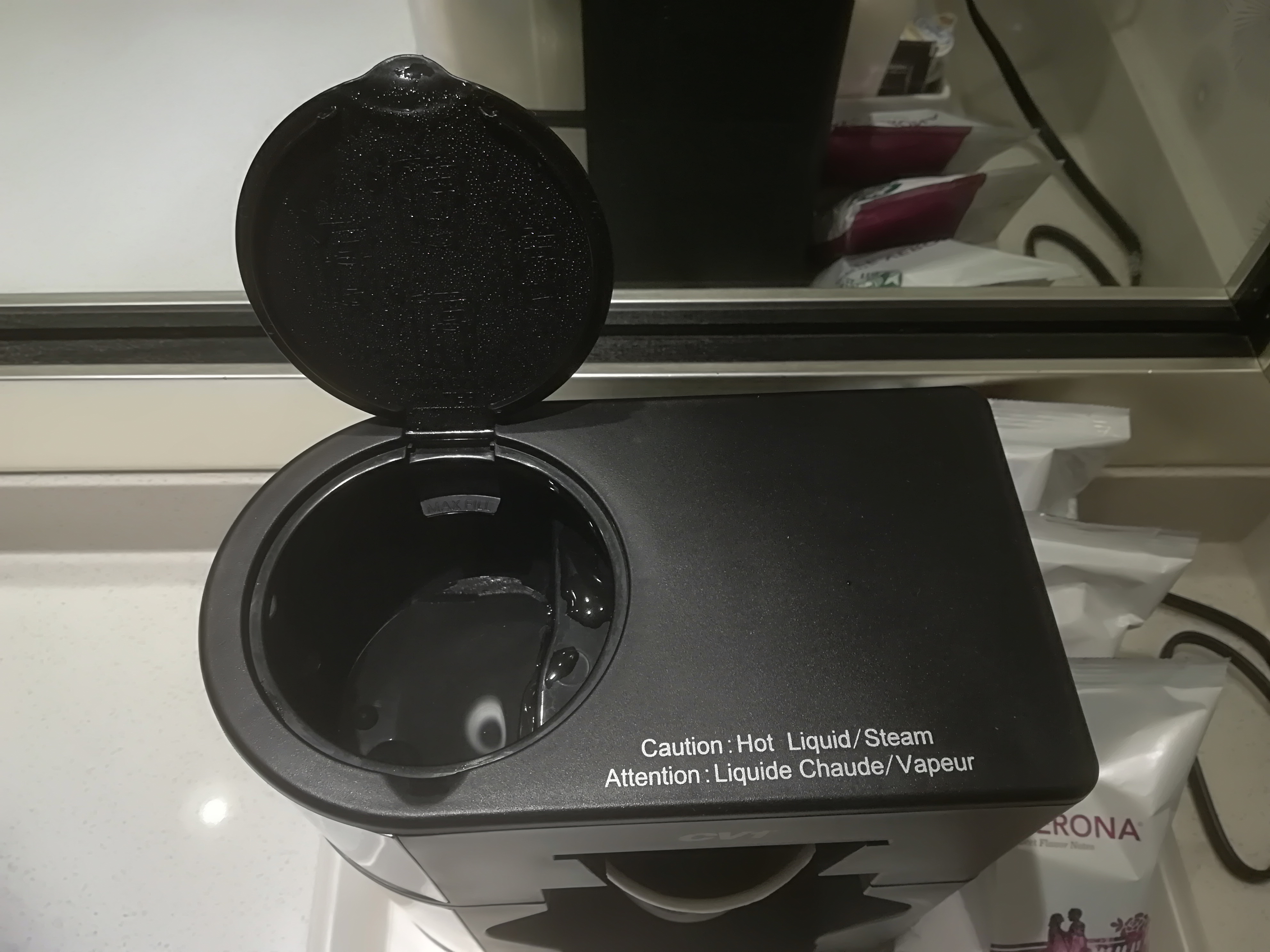
Meet CV1, the fully automated TeaCoffeeBot. Here is how it works.

A humanoid washes out cup, fills cup with clean water, pours water into CV1’s opening on top, then closes top. Alternative reality, humanoid forgets to close top.

bdr

Then the humanoid pours instant coffee (or puts teabag) into cup.

bty

The humanoid places the cup into the bottom opening of CV1.

bty

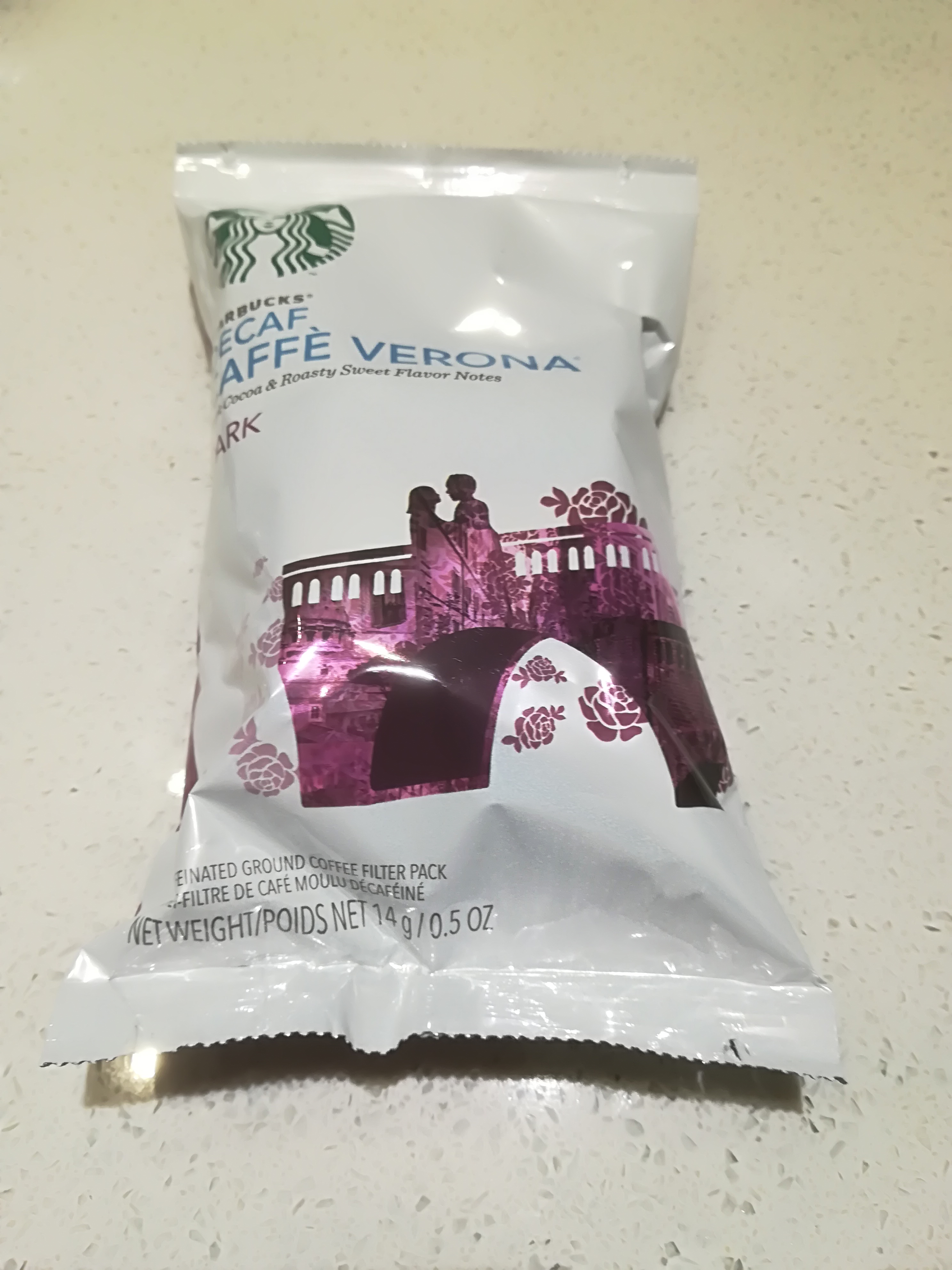
Yet another alternative reality, the humanoid puts free Starbucks coffee in space above location of cup. The humanoids assigned to us, haven’t been programmed to do this.

bty

Then humanoid presses button to start water heating and transfer process.

A built in timer is started in humanoid telling it to return to CV1 in three minutes.

Humanoid returns after 30 minutes, picks up coffee cup and delivers lukewarm coffee to intended recipient. Humanoid disappears, then returns to offers intended recipient taste enhancers.

bty

Apart from a few steps performed by a humanoid, the CV1 does everything else!