

Writing about travel presents me with one major difficulty = finding the appropriate date to publish results. Over the years, I have needed more time than the single week I previously allotted to myself. One of my latest trips was with my son, Alasdair, when we took a long weekend trip to Porto, Portugal from Thursday, 2026-10-29 to Sunday, 2026-11-01. I originally hoped to get something about the trip published on Tuesday, 2026-11-17, over two weeks after returning. Currently, the publication date has been extended to Thursday, 2027-11-26, which marks four weeks after the start of our trip to Porto.
An interuption. At this point in this post I should make a comment about Buzz, our VW EV. No, not because this is related to Porto, but because it influenced how I got there, and back. Buzz’ charging system had broken down during charging on the evening of Wednesday, 2026-10-21. Our online system told us to visit our VW dealership the following day, Thursday, 2026-10-22. We did, and we expected to spend the day having the broken component replaced. Unfortunately, there did not appear to be sufficient parts in Norway. Since the car could not be charged, we expected to be assigned a loaner vehicle that day, but there were none available. So we had to drive Buzz home, only to return the next day, Friday, 2026-10-23. Finally, we were able to hand over Buzz, and to receive a VW ID 3. Buzz was returned to us on Tuesday, 2026-11-03.
Potential buyers considering a Buzz, may find it profitable to wait until an updated version appears sometime in 2027. The most important improvements include: a redesigned multifunction steering wheel that trades touch-sensitive controls for real physical buttons. Vehicle-to-Load (V2L) Power with an adapter allowing users to draw power straight from the van’s battery to run electrical equipment rated from 2.0 kW to 3.0 kW. Updated infotainment and software add features like one-pedal driving, an Overnight mode that keeps climate control running while parked off-grid, and upgraded Connected Travel Assist with automatic traffic light recognition.
By 2030, a second-Generation ID. Buzz should be available. This will move away from the current MEB platform to the Scalable Systems Platform (SSP). Reported goals for the next generation include a lower prices, lithium-iron phosphate (LFP) battery packs, improved battery packaging and faster charging speeds compared to the current generation, a more ergonomic, functional interior and less retro.
Compared to Buzz, the ID 3 was certainly cramped. The good thing about it, was that it was free, although Trish initially had to post a NOK 9 000 deposit. This was cancelled, before it was taken from her bank account. It is not the sort of car I would want to own, even at half the price compared to Buzz. We learned to appreciate passenger carrying vans back in 2002, when we purchased a gasoline version of a Citroën Berlingo. Since then, we have always used such a vehicle, although some may want to put a Mazda 5 in a slightly different category.
After an incident with our first vehicle in 1993, we have always fitted our vehicles with appropriate winter wear, refusing to use all-year tires. Thus, Buzz was shod (on Friday, 2026-11-06) with studded tires, suitable for the snow conditions we experience in Norway. Back to the narrative…
On the Thursday, 2026-10-29, Trish drove me to the train station at Røra. From Røra, I took the 06:50 train to TR0 = Trondheim Airport, arriving at 08:02. This gave me almost 1 hour and 40 minutes before my SAS flight SA347 departed at 09:40.
By the time I had landed at OSL = Oslo Airport, Alasdair had arrived there by train from his house at Åros, and we waited in the lounge for our flight to CPH = Copenhagen Airport. We then took Flight SK1467, which departed Oslo Gardermoen (OSL) at 11:10 AM CET and arrived at Copenhagen Kastrup (CPH) at 12:25 PM CET (1h 15m flight duration). Flight SK2773 departed CPH at 14:25 and arrived at Francisco Sá Carneiro [1934 – 1980] Airport in Porto (OPO) at 16:55 local time. Since Porto is 1 hour behind Copenhagen, Oslo and Trondheim, the flight duration was 3h 30m. OPO is named after a former Prime Minister of Portugal , who was killed in an aircrash, near Lisbon.
A second interuption. My first trip to Portugal was to Lisbon. It began on 2004-04-23, when I went with Romsdal secondary school staff. Yes, they were mostly a bunch of socialists from Molde of varying maturity, although almost all of them had passed 50 years. That trip coincided with the 30th anniversary of the Carnation Revolution of 1974-04-25, which was a military coup protesting Portuguese colonial wars in Africa, and which led to a democratic realignment of Portugal. We returned to Norway on 2004-04-27.
In June 2004-06-21, I made a second trip to Portugal, this time with my family = Trish, Alasdair and Shelagh, visiting the Azores, returning to Norway 2004-06-28. What I remember about it was the excessive humidity.
My third trips to Portugal, was to Lisbon, as a representative for the prison school in Steinkjer and the prison in Verdal where I taught. That was in 2009. My mandate was to find social misfits from other European countries to have exchange visits with. I pride myself in being able to find and work with misfits. This core value is what attracted me to prison education.
Trip four occurred when Trish and I spend a month in Madeira after we retired in 2017. Yes, I had contemplated retiring to Madeira since it has two essential ingredients: mountains, and a proximity to the sea. It also lacks snow. The main deterrent, was the need to learn a third language. This was difficult for me, who has never really felt comfortable learning languages. Yet, it was probably worse for Trish, who has a severe hearing loss. We decided to remain in Norway, despite winters. This ends the second interruption.
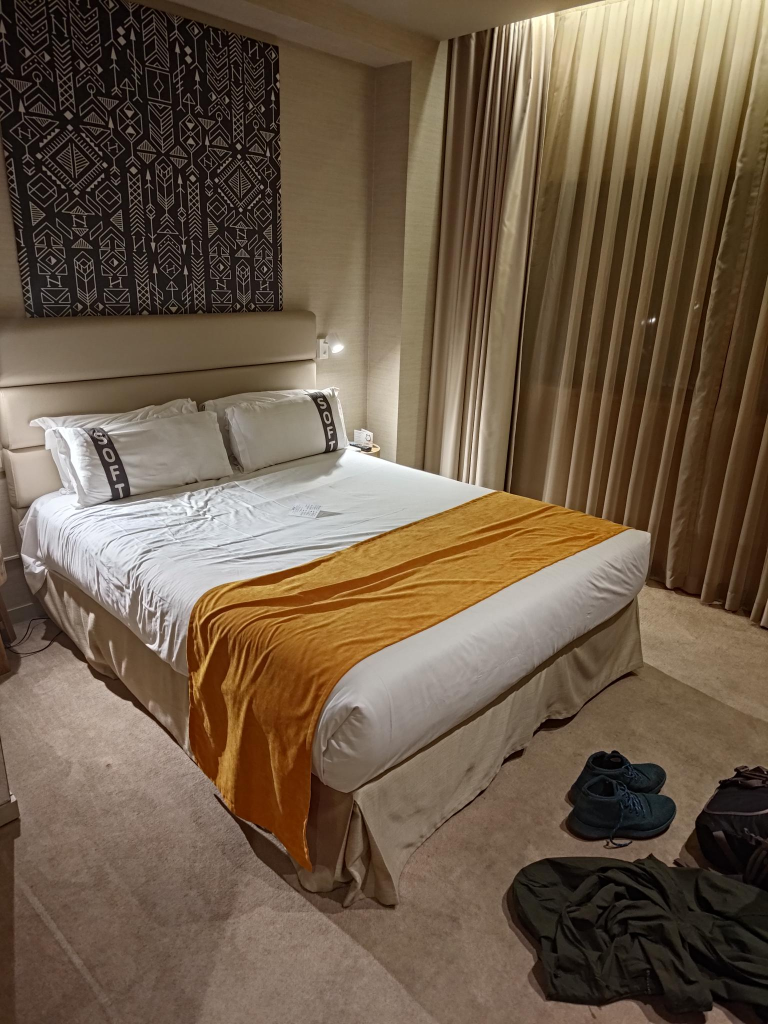
After landing, we took the Metro Line E (Purple) for about 30 minutes, from OPO to the Trindade station in downtown Porto. From there we walked to our hotel, Casual Inca Porto hotel. I agree with my son, who said, “I felt it nailed the value for money category.”
Friday
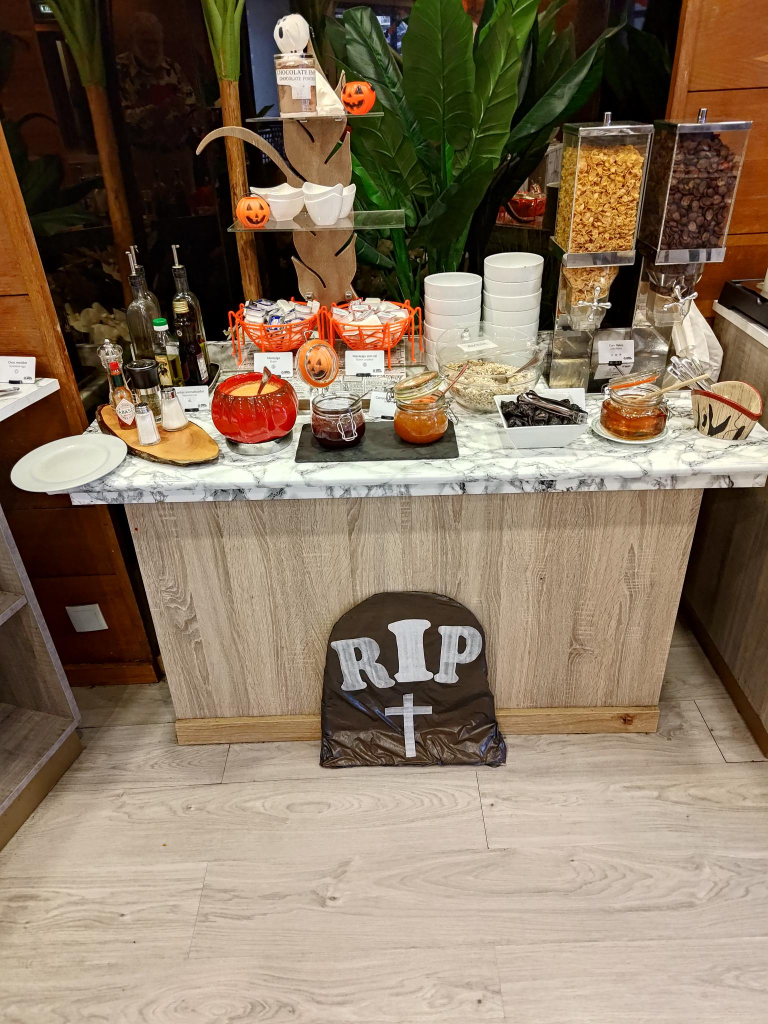
Halloween, has always been an important part of my life, if only because I was born on it = 1948-10-31. So, in my childhood, my birthday was always combined with a halloween celebration.
Despite, our attempt to include halloween as a celebration in Norway, especially when we moved to Inderøy in 1988. Most years, it never amounted to anything. Thus, when we arrived at our the Casual Inka hotel in Porto, we saw signs of Halloween in the lobby. These became even more pominent in the breakfast room the next morning, Friday – 2026-10-30.
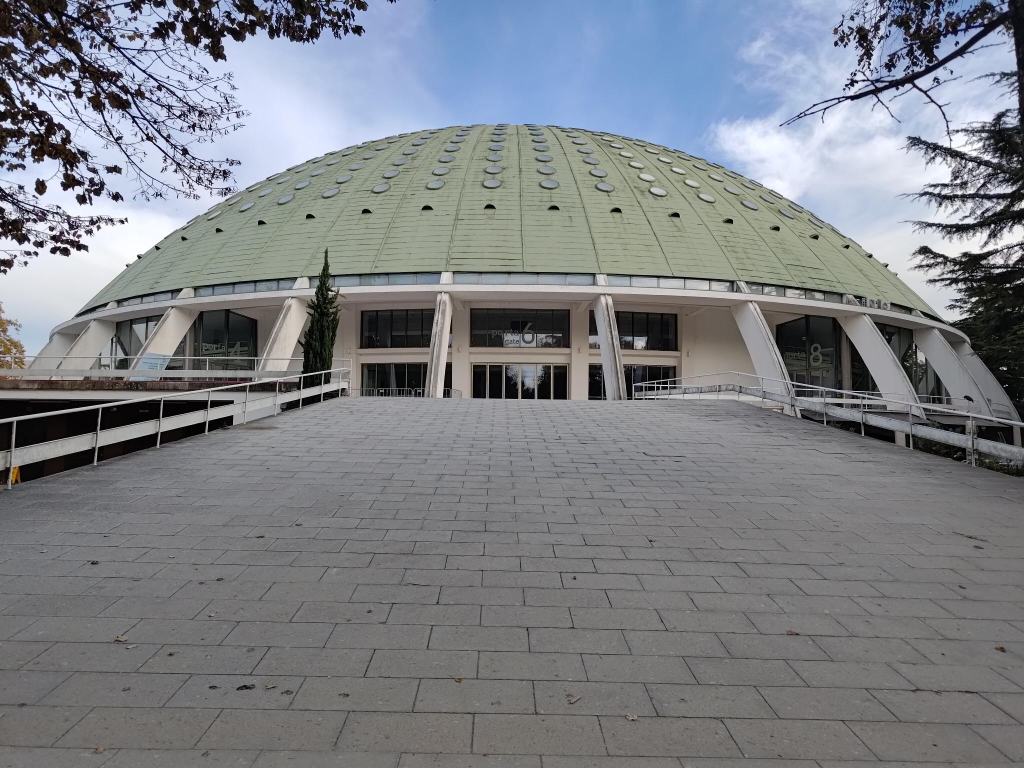
One of the highlights of Porto was the municipal garden. It was not as peaceful a place as hoped. At one place I found a sign advising people not to confront the local population of peacocks. They will attack if provoked. I restrained myself.
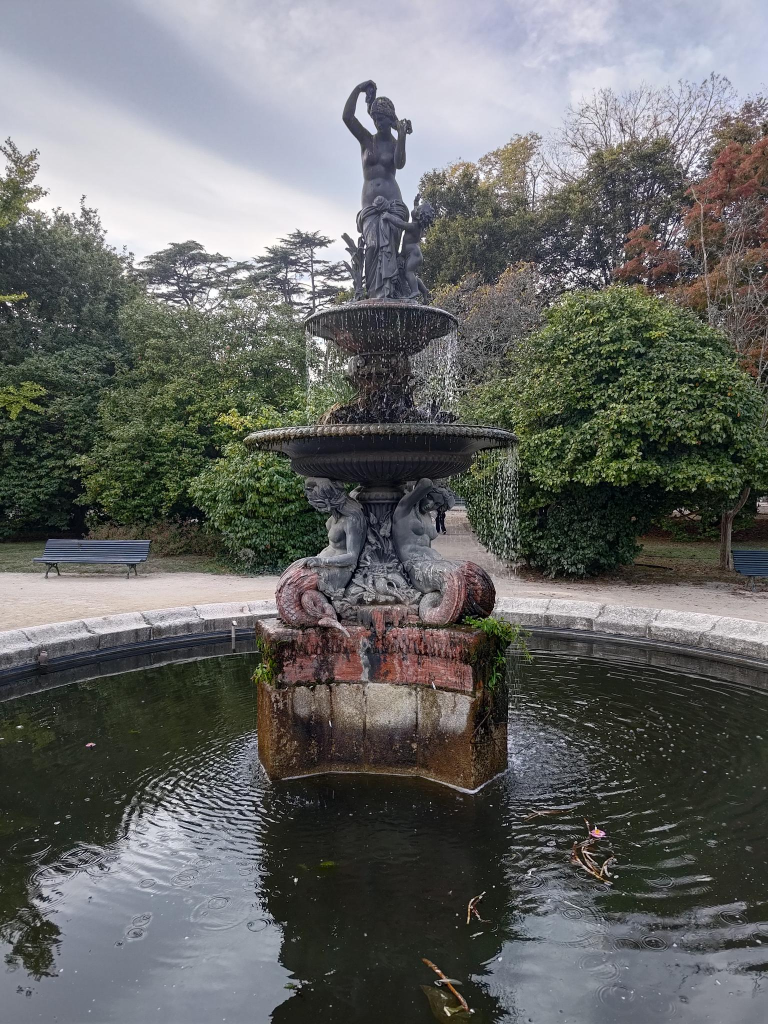
I have always found it interesting to note that one finds a disproportionate number of sculpted wet women in parks compared to the number of sculpted, wet wen.
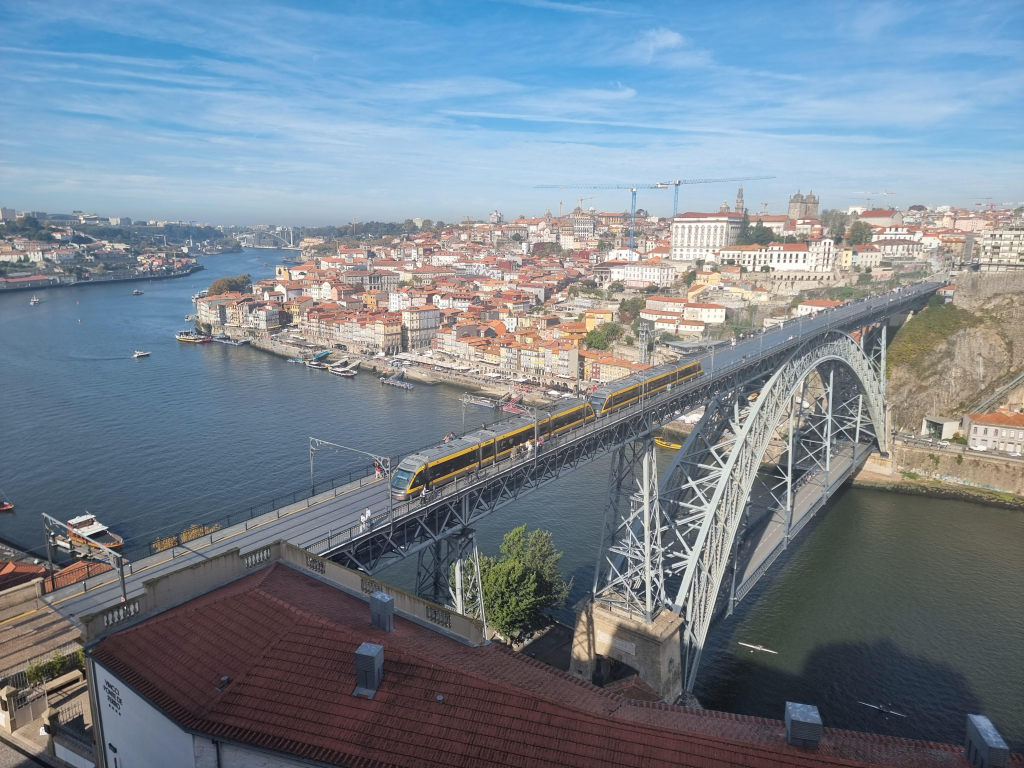
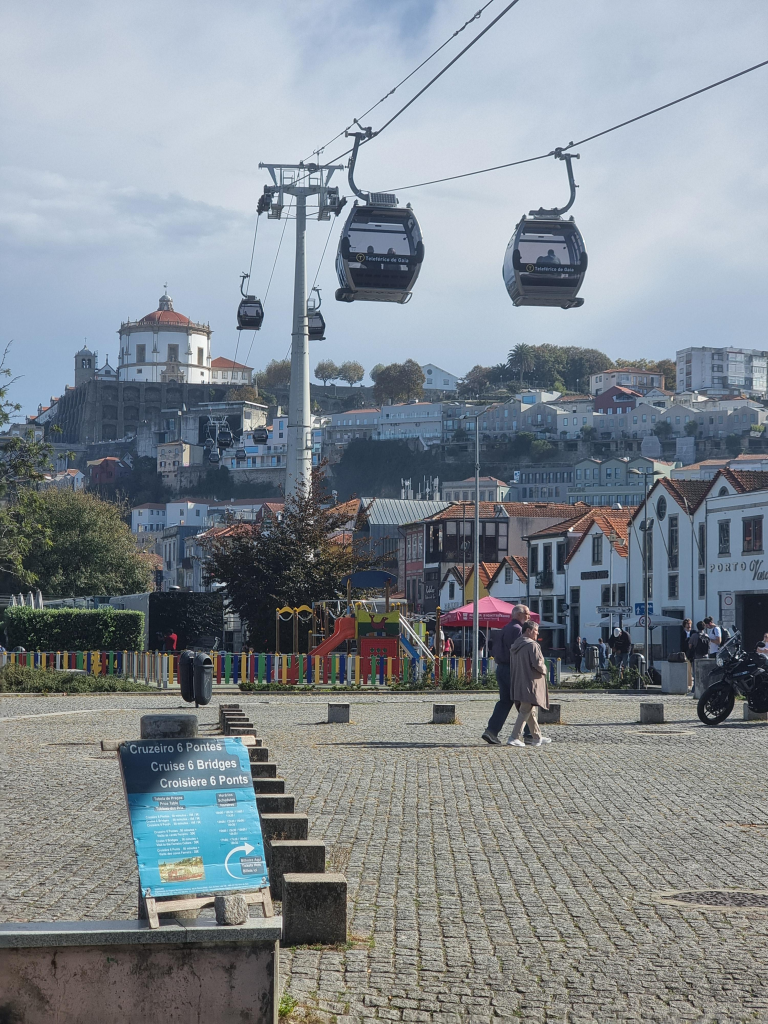
We spent Friday morning walking around Porto, then crossed over the Dom Luis I bridge to Gaia.
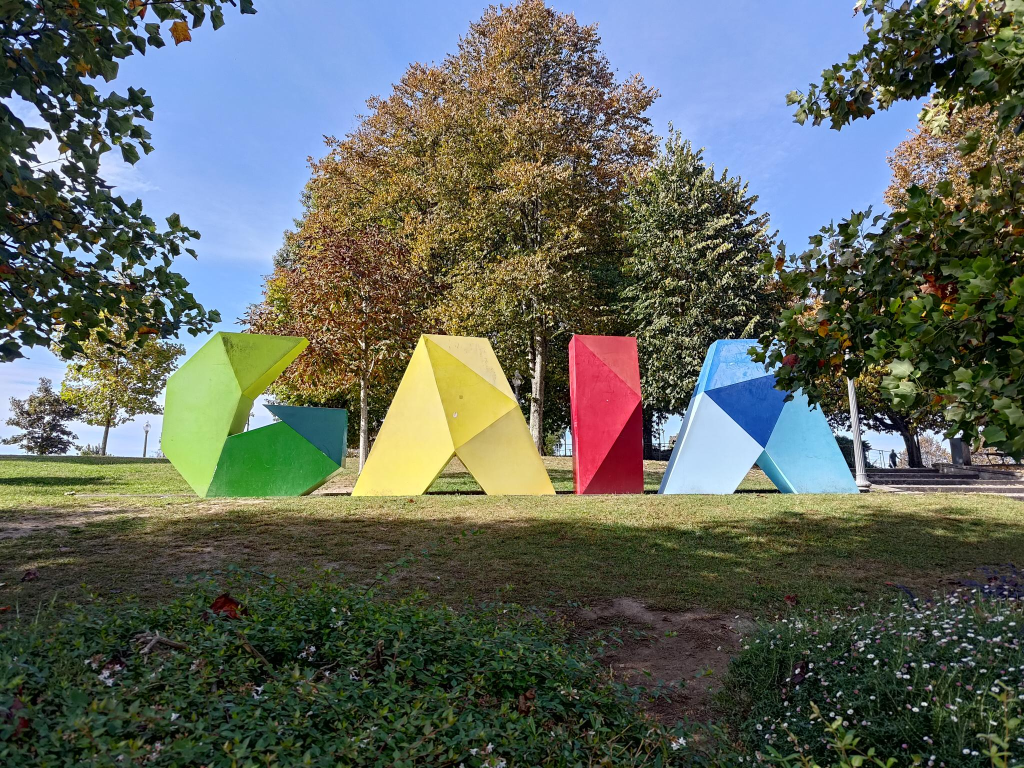
Tram Museum
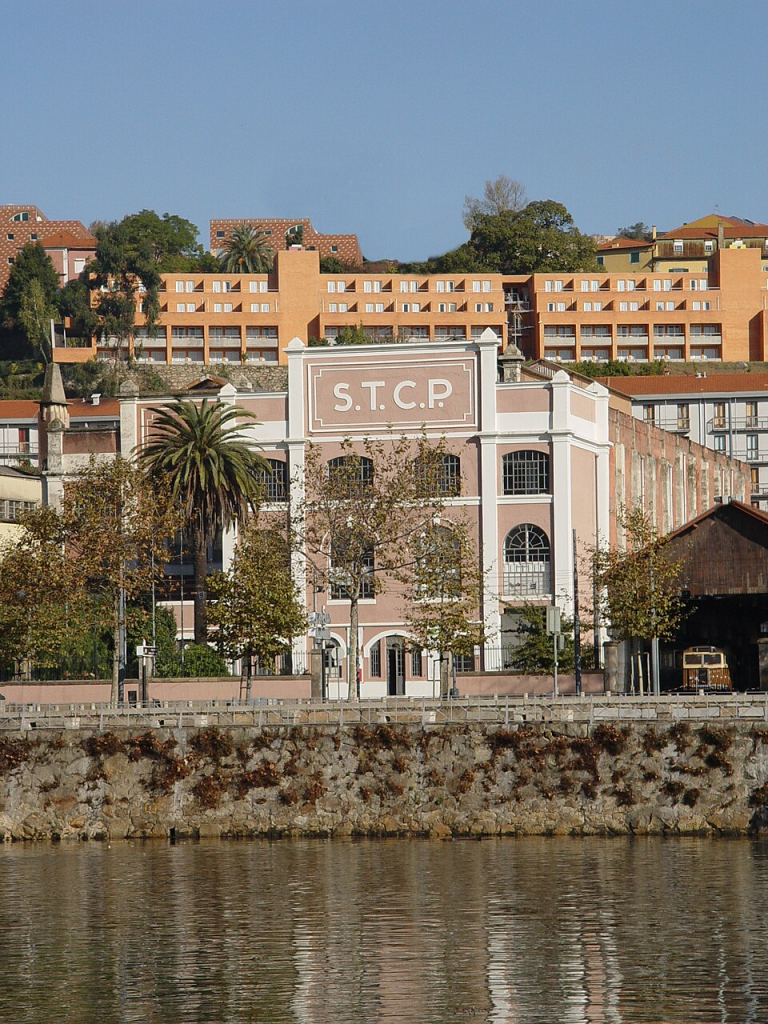
On the main floor we were able to enjoy seeing the history of tram usage in Porto, which included horse powered trams, which were first used
Porto’s trams were first powered by mules, a hybrid animal born from a male donkey and a female horse starting in 1872. Electric trams powered by thermoelectric (steam) power primarily burned coal starting in 1895. By 1915, the Massarelos thermoelectric power station was completed. This station now houses the Porto Tram Museum. In contrast modern Porto Metro light rail vehicles and current trams draw electricity from Portugal’s national power grid, which relies heavily on renewables (such as wind, hydro, and solar) alongside smaller quantities of gas generated thermal electric power.
The Massarelos plant could no longer meet demand on its own after around 1940, so external power suppliers were brought in before the plant ceased energy generation in the 1960s. It remains a substation for the three surviving tram lines.
Portugal phased out coal power in 2021-11 and has largely substituted it with renewables which supplying about 90% of Portugal’s domestic electricity production, while natural gas and some imports provide the rest.
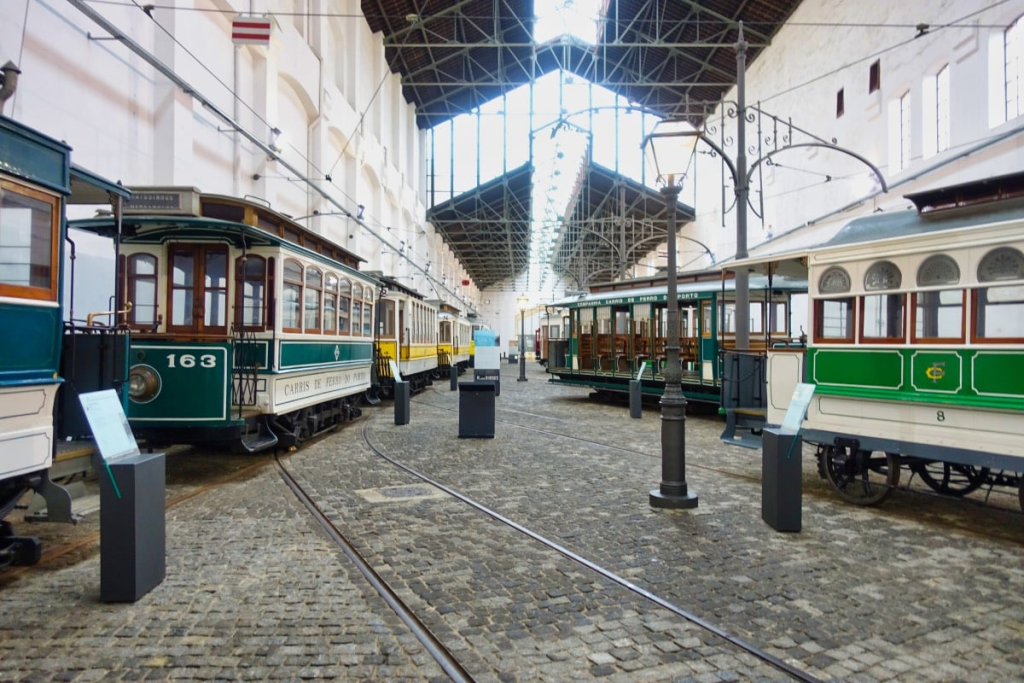
The Porto Tram Museum building has STCP written on it. This stands for Sociedade de Transportes Colectivos do Porto, or Porto Public Transport Society. It is the public transport company that runs the bus and tram service in Greater Porto. Prior to 1946, the tram company was privately owned. Now, it is publicly owned, but the formerly large tram system now has only three heritage tram lines. Most of the STCP work is to provide bus service.
There is also a light rail system in Porto. Metro do Porto, founded in 1993, owns the light rail network. STCP holds a 25% stake in Metro do Porto. However, actual train operations are contracted out under concession to ViaPorto, a consortium led by the Portuguese transport group Barraqueiro = stallholder (literal translation). In Brazilian Portuguese it also refers to a person who draws attention to themselves, makes a scene, or acts overly dramatically. Barraco often refers to a public commotion or argument.
Metro do Porto uses three main types of low-floor light rail rolling stock: Bombardier Flexity Outlook (Eurotram) = the original 72-vehicle fleet that entered service when the network opened in 2002. They are 7-module articulated low-floor trams built for street and tunnel running. Each module has 6 doors on each side (12 doors total), and a standard passenger capacity of 80 seated plus 134 to 215 standing passengers. Bombardier Flexity Swift (tram-train) = A fleet of 30 tram-train vehicles delivered around 2008–2009. They are built for higher speeds (up to 100 km/h) on longer suburban corridors. The number of door in each unit is not specified in public documents. However, they have double-sliding doors on both sides across their three-section articulated frame. Capacity: 248 passengers (100 seated and 148 standing at 4 passengers/m²). China Railway Rolling Stock Corporation (CRRC) Tangshan light rail vehicles = Newer light rail vehicles starting with an 18-unit order, delivered from 2022–2023, for network extensions. This was followed by an additional 22 units ordered for the Rubi Line (Line H) with deliveries scheduled to start in late 2026. They feature seven double doors per side and a 244 passenger capacity. Since its opening in 2002, the Porto Metro runs on 750 V DC through overhead lines.
As readers may notice, travelling with and being related to a transportation economist and historian, means that any incorrect transportation details result in censure and an immediate call for correction. I try to live up to my family obligations.
Barraqueiro is a large Portuguese transport and logistics conglomerate founded in 1915 and headquartered in Lisbon. It runs over 30 transport companies, employs around 9 000 people, operating a fleet of more than 4 500 buses, trains, light rail, and freight vehicles across Portugal and internationally. Its operations include suburban and interurban buses, freight haulage, and rail concessions such as Fertagus = a private commuter rail operator in Portugal that connects Lisbon to suburbs on the Setúbal Peninsula across the Tagus River via the 25th of April bridge. and Metro Transportes do Sul (MTS), sometimes called Metro Sul do Tejo, is a light rail system serving the Almada and Seixal municipalities on the south bank of the Tagus River across from Lisbon, Portugal.
Saturday
Aveiro
If I were condemned to spend the rest of my life in Portugal, the one city on this trip that appeals to me most is Aveiro. It is still big, almost 90 000 people, yet it seems so much more 20th century, compared to Porto and Gaia, the other two places we visited. Yes, I lived almost 2/3 of my life in the 20th century.
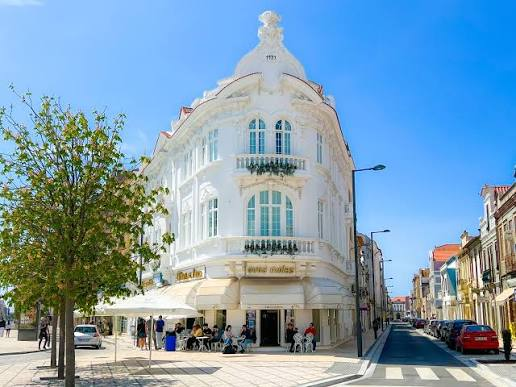
Aveiro is actually a celtic name. The Latinised toponym Averius is derived from the Celtic word aber = river-mouth. Part of the appeal of Aveiro is its Arte Nova = Art Nouveau architectural designs and tiles on some buildings that were created in the early 20th century. It also hosts an Art Nouveau museum.
Art Nouveau buildings in Aveiro became popular, especially between 1904 and 1920, with the construction of many such new style houses being reported in local newspapers. This style was imported into Aveiro by a conservative bourgeoisie and wealthy emigrants to Brazil who, upon returning to Portugal, wished to publicly express their social and economical power.
This version of Art Nouveau adapted to local tastes especially the façades of buildings, while the rest of the construction and interiors followed a conservative structure and decoration. One special characteristic was the use and production of tiles. Sometimes, these tiles are often the only Art Nouveau element present in a building.
Tiles were common in traditional Portuguese construction because they were affordable. They also provided waterproofing and enabled the embellishment of houses that used adobe = sun-dried clay bricks. Tiles with sinuous floral motifs were produced locally in the Fonte Nova factory.
Construction of Aveiro’s original railway station started in 1856. It opened in 1864, but soon became too small for growing passenger and freight traffic. There is some confusion in the sources I have used. Some state that the first station was remodelled in 1915 – 1916. Others say that the first station was replaced with an entirely new structure. Regardless, the remodelled/ rebuilt station appeared in the Casa Portuguesa style, giving it a strong regional identity.
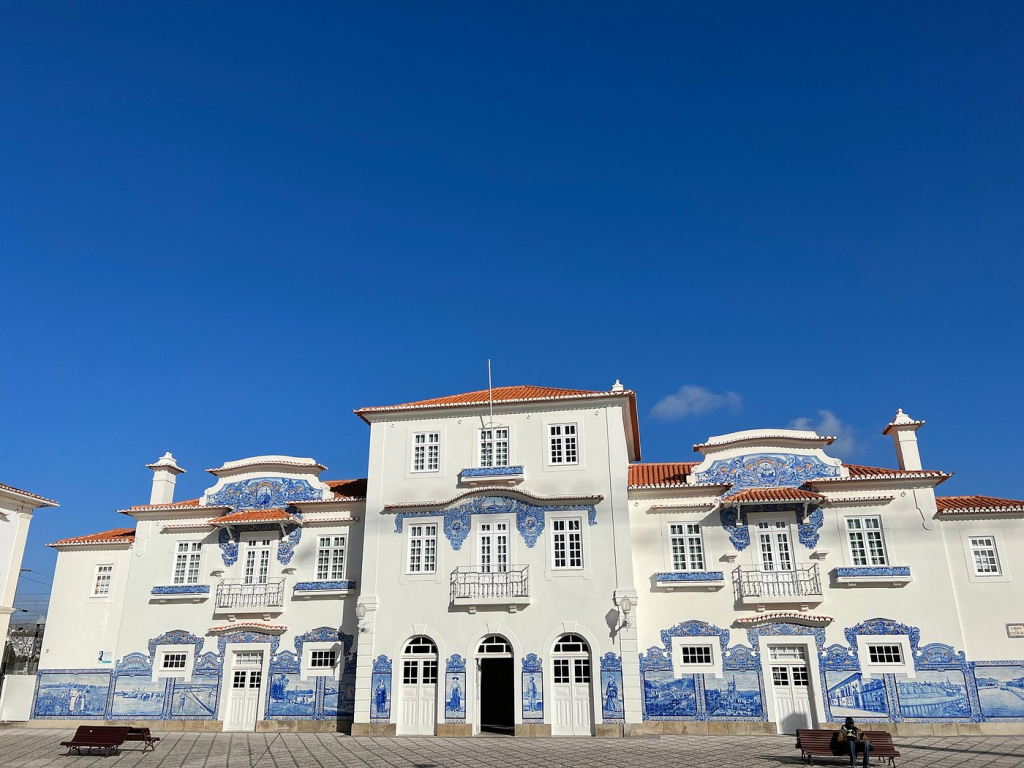
Azulejo painters Licínio Pinto (1882 – 1951) and Francisco Pereira (1891 – 1961) of the Fábrica da Fonte Nova created the tiles in 1916. Their panels depict salt production, marine agriculture, local industries, and everyday figures like fishermen, varinas (fish sellers), and tricanas (young women from the Aveiro and Coimbra area). Located at Largo da Estação, some sources say the old station acts like a free mini-museum and makes an easy stop on the way to Aveiro’s canals.
Fábrica da Fonte Nova was founded by Norberto Ferreira Vidal (1843 – 1886) and Luís da Silva Melo Guimarães (? – ?) as Fábrica de Louça da Fonte Nova, it played a central role in Aveiro’s ceramic boom. It produced earthenware (faiança), stoneware, tableware, structural building materials, and decorative azulejos—including sinuous floral Art Nouveau tiles and signature blue-and-white regional panels. After closing temporarily in 1908, it reopened in 1909 under Manuel Pedro da Conceição (? – ?) and operated until a fire forced its permanent closure in 1937. (Nearby in the same Fonte Nova district, the red-brick Jerónimo Pereira Campos ceramic factory was founded in 1896 and later adapted into the Aveiro Congress
After taking the train from Porto, we ended up in Aveiro, about an hour later. We arrived at a modernist train station that opened in 2005. The station serves major lines including Alfa Pendular, Intercidades, Regionais, and Porto Urban Trains, as well as the narrow-gauge Linha do Vouga, with its focus on seasonal historic train rides.
The new station was designed by João Lúcio Lopes, who was most likely born in the mid to late 1950s. He studied architecture at ESBAL = Escola Superior de Belas-Artes de Lisboa in Lisbon from 1974 to 1980. He founded his Lisbon-based studio, João Lúcio Lopes Arquitectos, in 2000 and taught as a visiting professor at the Faculty of Architecture at the Technical University of Lisbon (FA-UTL) from 2001 to 2012.
Because railway tracks often split neighborhoods in two. Lopes designed the station around four entry points—two on each side of the tracks. Outdoor reception areas link the historic center with surrounding urban areas. A wide underground passage connects the platforms and houses ticket counters, shops, and a small café/snack bar, where we puchased ice cream before our return journey. Many travellers find the modern building plain compared to the historic station. While some may complain, I appreciate this approach, as I often have difficulty navigating urban environments.
Portugal is undertaking studies about how to adapt platforms for high-speed rail. These are slated for completion by mid-2027, alongside work on the Porto–Lisbon high-speed corridor. Infraestruturas de Portugal also launched a €2 million tender in 2026 to rehabilitate adjacent station buildings and improve public service spaces.
To refresh ourselves, we bought some coffee and sweets at the Tricana de Aveiro, located across the street from the station. The building dates to 1927, with the pastry shop opening in 1994 while the guesthouse was renovated in 2019. It was clean and pleasant. In Portuguese, tricana refers to a traditional working-class woman.
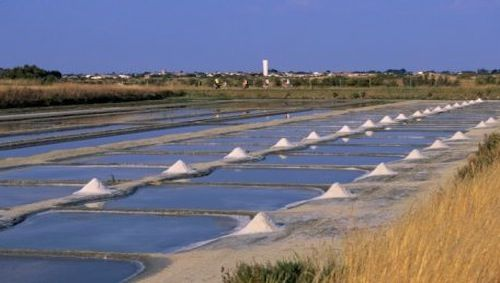
The salt flats of Aveiro (Salinas de Aveiro) are historic coastal evaporation pans along the Ria de Aveiro lagoon, where traditional sea salt harvesting dates back to at least the 10th century. Indeed, it is estimated that they existed in Roman times. Seawater is evaporated using sun and wind across shallow pans and channels managed by traditional salt workers (marnotos), producing sea salt and flor de sal. This last phrase refers to: flower of salt (literal translation), fleur de sel (widely used French term for the same type of salt), or salt flower. This was the type of salt used at dinner tables, rather than in kitchens.
Another product of Aveiro is moliço seagrass, which was used as fertilizer before the development of chemicals for that purpose. Moliço is a traditional mixture of seagrasses, aquatic plants, and seaweeds harvested in the Ria de Aveiro lagoon and used historically as organic fertilizer for sandy farmland. The name comes from the Portuguese word mole = soft.
The boats used for harvesting have been repurposed into canal boats gondolas. If one examines these closely, one will discover that they are powered and controlled by an outboard motor (often electric), with the shaft and propeller penetrating the water through the hull of the boat. Yes, the boats are equipped with rudders, but these are decorative and do not reach below the water surface. From what I could see, there is a crew of two on board, one controlling the vessel, while the second person entertains the paying customers. On one boat I counted over twenty passengers on board. On another there were eight.
Sunday
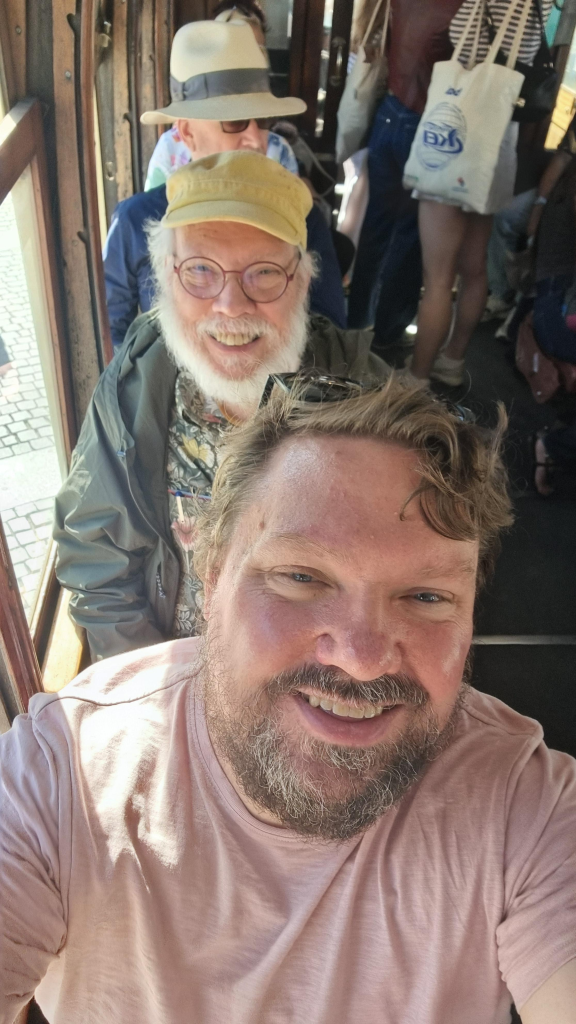
Given a choice between an old tram and a new tram, I will always opt for something newer. The old vehicles are noisy! I enjoy a quiet world. In Porto, public transport is underdimensioned. By that I mean that there is not enough seating for travellers.
Foz do Douro doesn’t have any major tourist attractions. Reading material said it is an area to explore slowly to embrace the atmosphere. I didn’t enjoy that embrace. For a ruralist Norwegian, it was surprisingly loud, although less extreme than in the centre of Porto. There are two promenades: the Promenade Foz do Douro along the riverside and the Castelo do Queijo, along the beach.
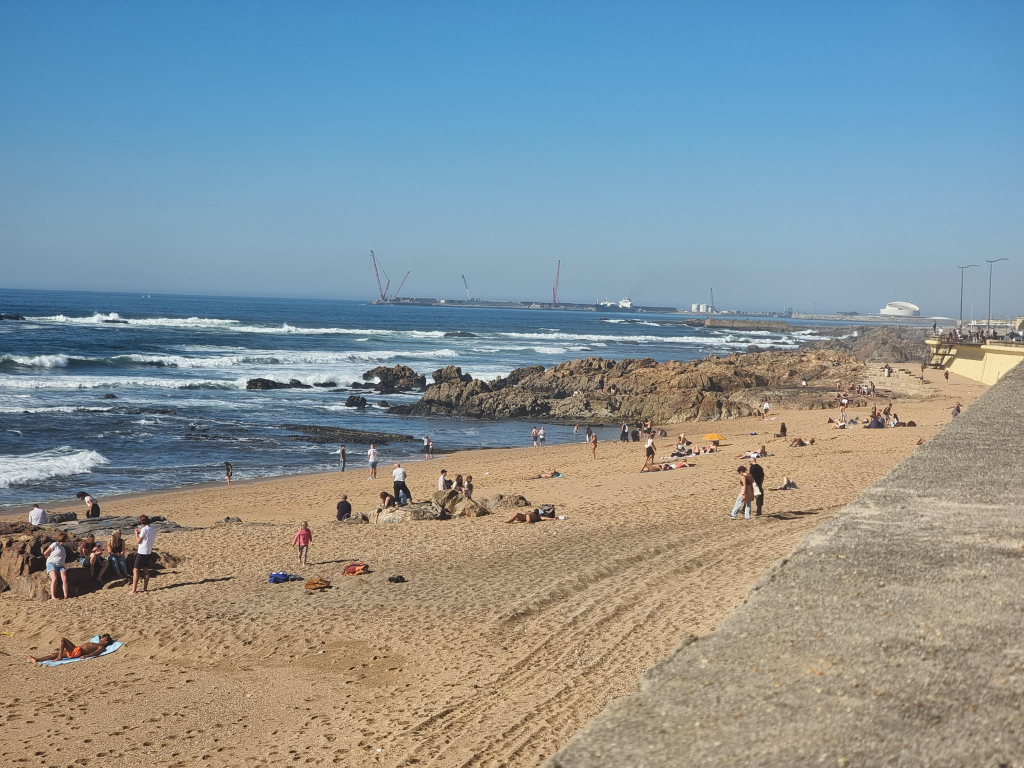
Returning to Porto, I was able to embrace something I appreciate, a monumental artwork.
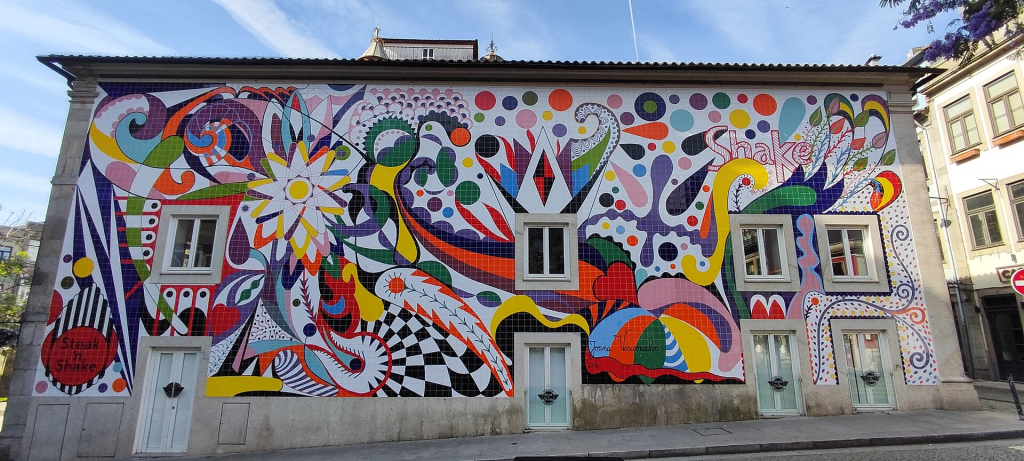
Joana Vasconcelos (1971 – ) was born in Paris France, where her parents were living in exile from the Estado Novo dictatorship, established in 1933. After the 1974 Carnation Revolution, the family returned to Lisbon, Portugal. Wikipedia tells us, “Vasconcelos’s work characteristically takes an object associated with domestic labour, popular devotion or mass consumption and changes its scale, quantity or context: saucepans become stiletto heels, plastic cutlery becomes a filigree heart, drying racks and steam irons become kinetic sculpture. Craft techniques traditionally coded as feminine, among them crochet, embroidery, lacework and the painting of azulejos, are used at architectural scale, a strategy critics have read as an attempt to monumentalise and revalue women’s work.”
The mural spans roughly 20 meters across the building’s exterior and is composed of 8 000 hand-painted ceramic tiles = azulejos, this makes it one of Vasconcelos’s largest public works. While traditional Portuguese azulejos are famously blue and white, this design draws inspiration from northern Portuguese folk crafts—specifically the intricate metalwork of Portuguese filigree and the vibrant patterns of Viana do Castelo embroidery. Vasconcelos has mixed historic regional motifs with pop polychromy, using bright, saturated colors, undulating lines, and dynamic abstract shapes. This gives the flat wall a strong sense of movement.
Steak ‘n Shake is an American fast-food restaurant chain famous for its Steakburgers, hand-dipped milkshakes, and beef tallow fries. It was founded in 1934-02 by Gus Belt in Normal, Illinois, but now has its headquarters in Indianapolis. It operates across the U.S. as in parts of Europe. The artwork involved a partnership between Joana Vasconcelos and Steak ‘n Shake Portugal for the chain’s (now former) local flagship store. It marked the brand’s first artistic collaboration in its over 80-year history.